
From structured care that saves lives to fostering joy in the chaos of the ED, here are the lessons that will transform how we deliver emergency care.
1. Structured Care Improves Patient Outcomes
Emergency departments are fast-paced and unpredictable, often grappling with challenges like junior staff, high patient acuity, and access blocks. ED nurses are the frontline heroes, making critical decisions that can shape a patient’s entire healthcare journey. So, how can we ensure that patients consistently receive the best care, no matter who is on duty? The answer lies in structure.
For me, structured care began with a personal journey. Moving to Australia from overseas, I found it difficult to break into the ED workforce. Speaking the same language (yes, I was speaking English) but found it challenging to convey what I meant during the interviews. That’s when I discovered the HIRAID Framework, and it not only helped me land my first ED job, but it has also been a cornerstone of my practice ever since. I remember one case where a patient with breast cancer, presumed to be in palliative care, came in feeling lightheaded. Using the HIRAID framework, I performed a thorough A to G assessment, which led me to escalate concerns to the ED consultant. A CT scan revealed a new lesion in her brain, which had been causing her symptoms. Without a structured approach, this critical finding might have been overlooked.
A framework like HIRAID brings clarity and consistency to the chaos of the ED, ensuring that no matter the nurse’s experience level, nothing critical is missed.
2. Make Working in the ED Fun (Yes, Really!)
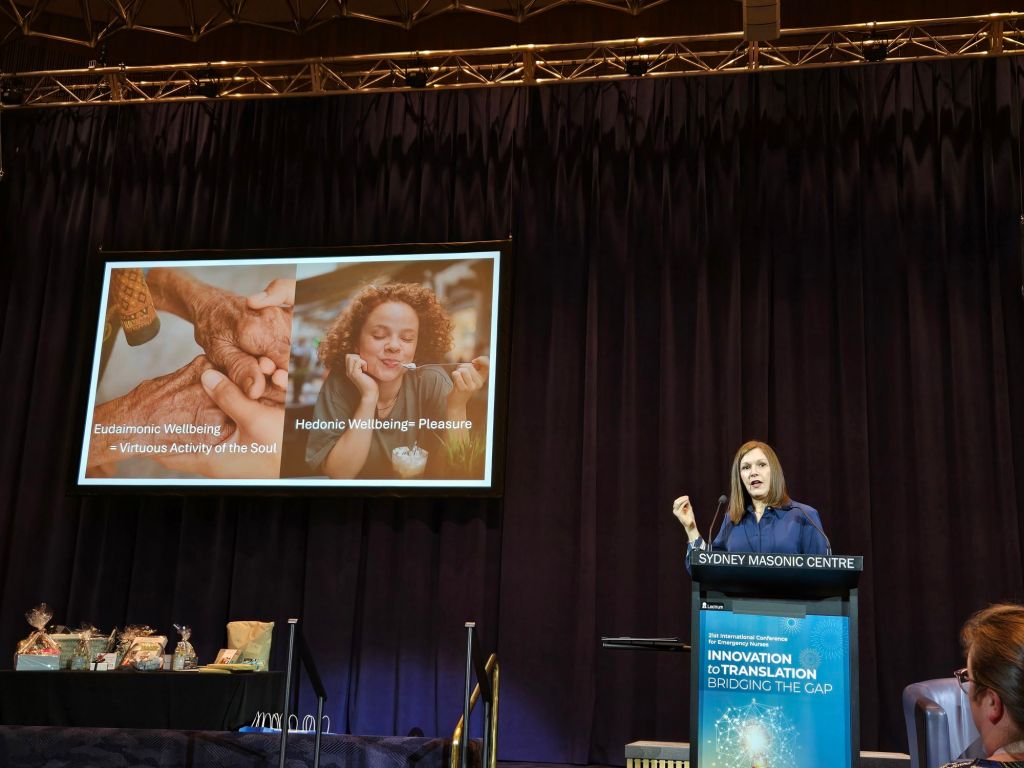
Let’s face it: working in the emergency department is tough. The unpredictability can be exhausting, and yet, some people thrive in this environment. So, what’s the secret? A positive culture that promotes well-being through meaning, mastery, and connection.
When I first started working in the ED, I quickly discovered the value of team bonding. Before COVID-19 hit, we used to gather at the pub across from the hospital. Those evenings made me feel truly welcome and a part of the team. It’s those small, informal moments that often create the strongest sense of community.
In terms of meaning, there’s nothing quite like seeing the immediate impact of relieving a patient’s pain. Knowing that I’ve helped ease their suffering, even if just a little, gives me a deep sense of purpose. Mastery, for me, comes from continually learning how to manage complex cases, but also finding joy in the fundamentals—like making sure my patients are comfortable and pain-free.
3. More Training Isn’t Always the Solution
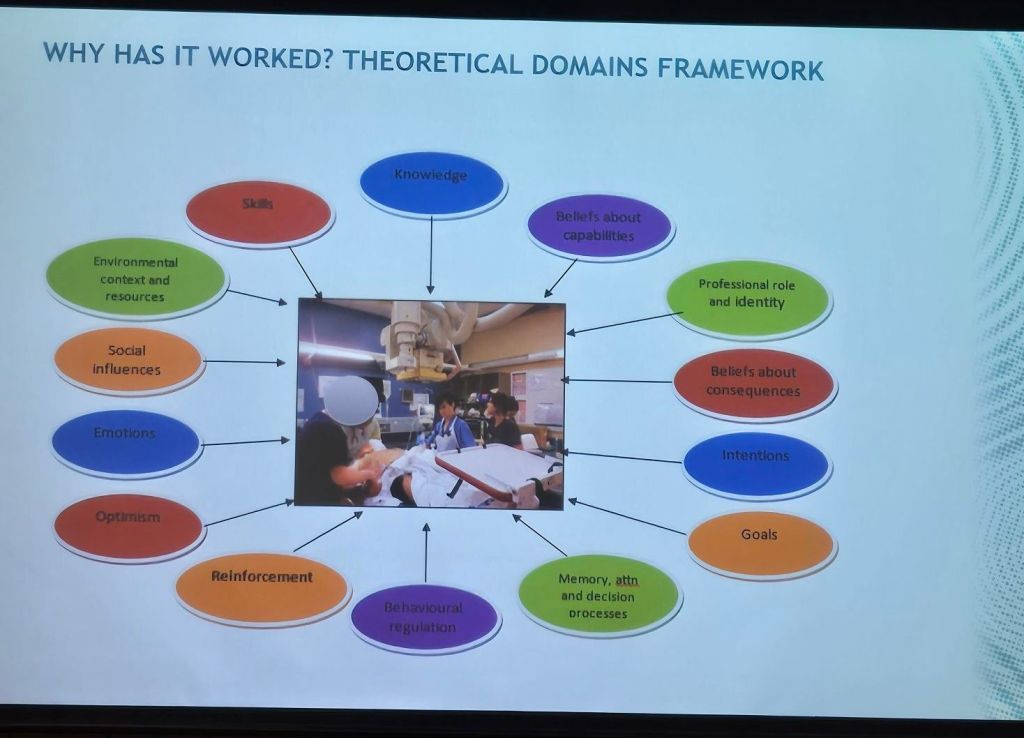
It’s easy to respond to mistakes or complaints by rolling out new training sessions or adding more checklists. But is that really the fix? Often, these measures don’t address the root cause of why a behaviour or action wasn’t performed as expected.
While I haven’t used the COM-B Model or Theoretical Domains Framework (TDF) in my own practice yet, I’m excited about their potential. I’m particularly interested in how we could apply these models to identify barriers and enablers to delirium screening in our ED. It’s a challenge we face, and understanding the real reasons behind gaps in behavior—whether it’s capability, opportunity, or motivation—could be the key to improving our approach.
Finally, a bonus lesson from the last plenary session speaker, Marty Wilson, who talked about resilience and change. Life is change and a grateful heart makes a happy heart. I am truly thankful for the support I have received along this journey. I would like to express my heartfelt thanks to the Australian Nursing & Midwifery Federation (ANMF) for the scholarship grant, which made it possible for me to attend the 21st ICEN Conference. I am deeply grateful to my manager and employer for granting me the study leave that allowed me to fully immerse in this incredible learning experience.
Most importantly, I want to thank my family, especially my husband, for their unwavering support. Their encouragement and understanding have been my anchor, and without them, none of this would have been possible.
The future of emergency care is in our hands. Let’s bring these lessons into our departments and start making meaningful changes now. Whether it’s implementing structured care approaches like HIRAID, fostering a positive team culture, or digging deeper into behavior change with COM-B and TDF, there’s something we can all do to elevate the level of care and improve our work environment. What’s one step you’ll take today to make a difference?


 Trina's Notes
Leave a comment