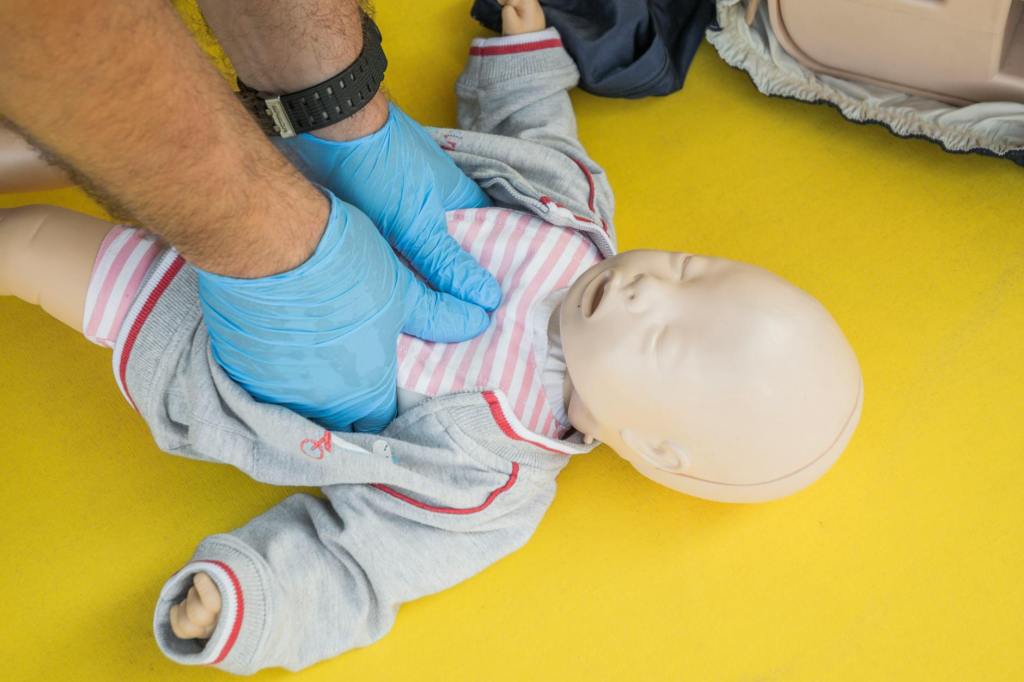
I was fortunate enough to attend the ACCCN ALS Instructor’s Course last September 5-6, 2024. Special thanks to my employer, Epworth Hospital, and my managers, Jess and Alanna, for making it possible. Those two days were so full-on, we barely had a chance to sit down. There was minimal didactic. Rather, Tom and Simon made sure that we would all engaged by packing the days with loads of experiential learning activities that allowed us to practice the different skills that we will need to facilitate an Advanced Life Support training course. Here are the 3 main things I went home with:
1. Establish a safe space
A safe space is a welcoming space that allows the learners to experiment and try out possible actions that they would not normally try due to fear of making a mistake. During those two days, I felt safe to actually “make a mistake,” by deviating from the ALS protocol so as to play out a scenario that I thought I might potentially encounter when I eventually run my own ALS course. During the debrief, I did not feel judged. I was not made to feel incompetent. Rather, it felt like a healthy discourse where we all learned from each other and a clear pathway on what we should do if that situation arises.
2. Debrief using frameworks
There are two main purposes of debriefing. The first is to reinforce positive actions or behaviours. The second is to correct the negatives. Using frameworks, such as the ACE, to address a negative behaviour or an incorrect action allows the learners to think deeply as to what led caused the incorrect action. The ACE framework stands for Action is recognised, Concern is voiced, and Enquire what caused them to do such action. This framework is grounded on compassionate curiosity, where you, as the facilitator, try to uncover more information in a non judgemental way while also being able to know what they are feeling or thinking.
3. Simulations need not be fancy
Setting up a high fidelify simulation scenario can be time-consuming, resource-intensive, and can be difficult to set up. Depending on the objectives of your simulation, you may be able to achieve this just by using low-fidelity Visually-Enhanced Mental Simulation (VEMS). Here, you use a laminated life-size cut-out of the human body to represent your patient, as well as other laminated cardboard pieces to represent interventions such as inserting an IV cannula, measuring blood pressure, etc. couple with a “thinking out aloud” model, where students speak out to the group the actions that they would do, given the scenario, whilst they gragthe representation of the action (like inserting an IV cannula), and placing it within the patient representation. This is especially helpful when you are trying to train learners on non technical skills like team dynamics, communication, or carrying out a protocol, among others. We did not practice low-fidelity VEMS, but the discussions around this truly sparked my interest in this simulation modality.
So there you have it. The 3 main things I learned from attending the ACCCN Instructor’s Course are making sure that you create a safe space for experimentation, use frameworks when facilitating debriefing, and low fidelity Visually Enhanced Mental Simulation mat be sufficient when training non technical skills.
What about you? Have you ever attended an ALS Instructor’s Course? If yes, how was your experience? If not, woild you consider attending one as well? Let me know in the comments section below.

 Trina's Notes
Leave a comment